
Chemistry of Life Systems

We study proteins, RNA, and DNA, from how they function to novel biosensors, imaging tools, and therapies. Our tools include spectroscopy, crystallography, microscopy, mass spectrometry, and protein engineering, and our systems range from basic models to disease-related proteins.


✓= accepting graduate students in Fall 2027
Min Chen Lab · 2025
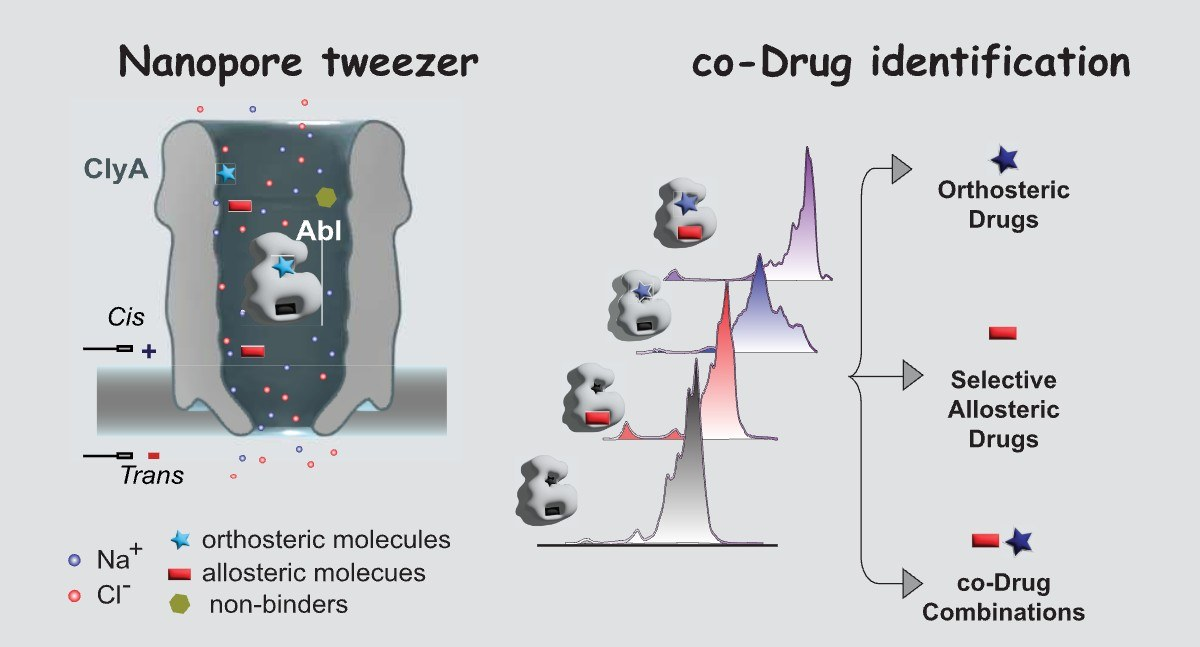
Selective Identification of Allosteric Inhibitors and Co-Drug Combinations Targeting Kinases by Using a Nanopore Tweezer Approach
Allosteric inhibitors offer a route to highly selective kinase drugs, but conventional screens depend on known binding sites or have low throughput. The Chen Lab traps Abl kinase, with its active site blocked, inside a ClyA nanopore and follows ligand-induced changes in the ionic current, detecting allosteric binders and co-drug combinations one molecule at a time and without prior structural knowledge of the binding site.
F. Li, J. C. Foster, L. Nguyen, M. Chen, ACS Nano 2025, 19, 34617–34627
Materials for Sustainability

We design, synthesize, and characterize new materials, especially at the nanoscale: polymers, nanoparticles, and crystalline solids for energy, catalysis, sensors, devices, and medicine. Theory is built in from the start, to understand the atomic-scale processes behind them.





✓= accepting graduate students in Fall 2027
Walsh Lab · 2026
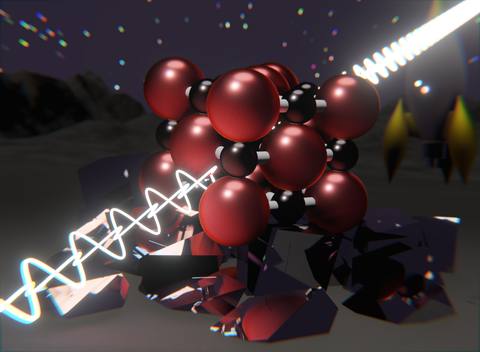
High-Pressure Synthesis of a Novel Body-Centered Tetragonal Vanadium Carbide
The vanadium–carbon system is one of the most studied binary systems, owing to its importance in steels. Using in situ X-ray diffraction during synthesis between 1.0 and 5.1 GPa, the Walsh Lab reports the synthesis and recovery of a novel metastable body-centered tetragonal vanadium carbide. This demonstrates that high pressure can uncover new phases even within well-explored systems.
E. E. Cote, T. L. Nelson, S. D. Ambos, J. Arigbede, C. Walsh, R. E. Bernard, H. L. Brooks, M. L. Whitaker, J. P. S. Walsh, Chem. Eur. J. 2026, 32, e02753
Metz Lab · 2025
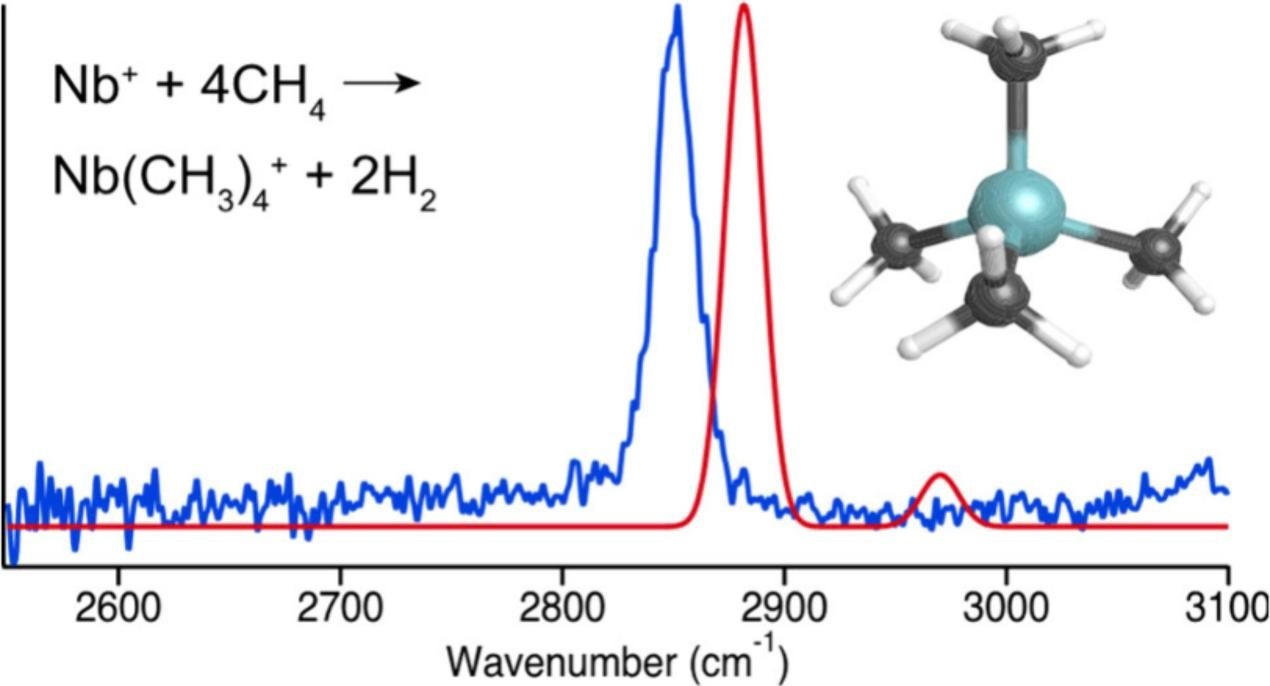
Vibrational Spectroscopy of C–H Activation Intermediates and Dehydrogenation Products of Sequential Reactions of Niobium Cation with Methane
The Metz Lab measures vibrational spectra of the ions formed when niobium cations react with up to four methane molecules, and identifies their structures with the help of density functional theory calculations. The spectra capture entrance-channel complexes, carbene–dihydrogen exit-channel complexes, and dehydrogenation products, following the sequence of C–H activation steps.
A. Das, J. R. Gerrior, R. B. Metz, J. Phys. Chem. A 2025, 129, 8407–8418
Andrew Lab · 2024
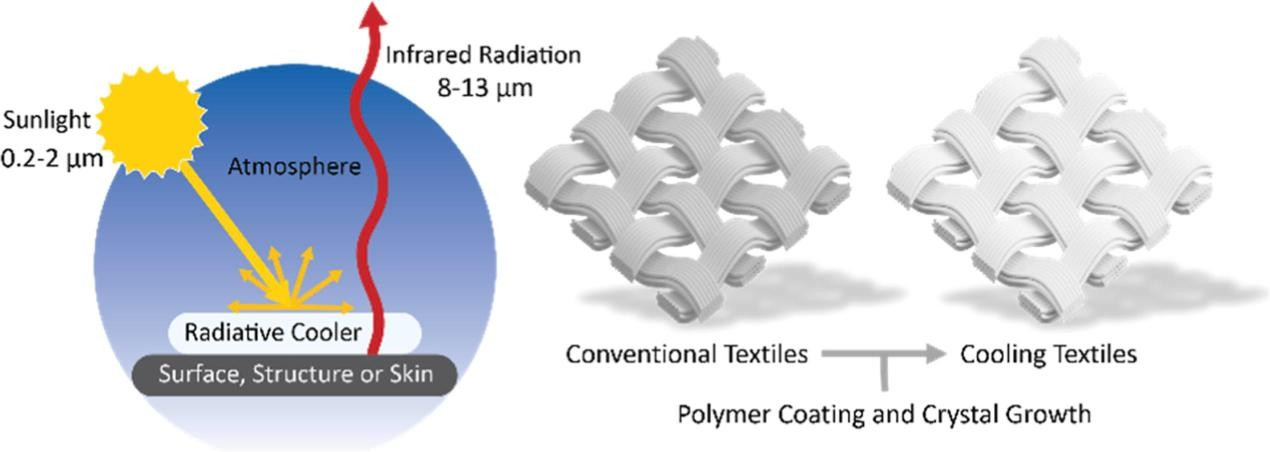
Microstructured Reflective Coatings on Commodity Textiles for Passive Personal Cooling
Fabrics that reflect sunlight while emitting body heat in the infrared can keep the wearer cool outdoors. The Andrew Lab grows layered calcium carbonate and barium sulfate coatings directly on common fabrics by photoinitiated chemical vapor deposition and ion-exchange crystal growth, and a coated polyester fabric stays up to 8 °C cooler than an uncoated one.
E. D. Patamia, M. K. Yee, T. L. Andrew, ACS Appl. Mater. Interfaces 2024, 16, 59424–59433
Measurement and Modelling

We use mass spectrometry, spectroscopy, and theory to probe structure and reactivity at the atomic scale. We also develop new computational methods to harness ever-growing computing power, across biological chemistry, materials science, and reaction kinetics.
✓= accepting graduate students in Fall 2027
Hardy Lab · 2026
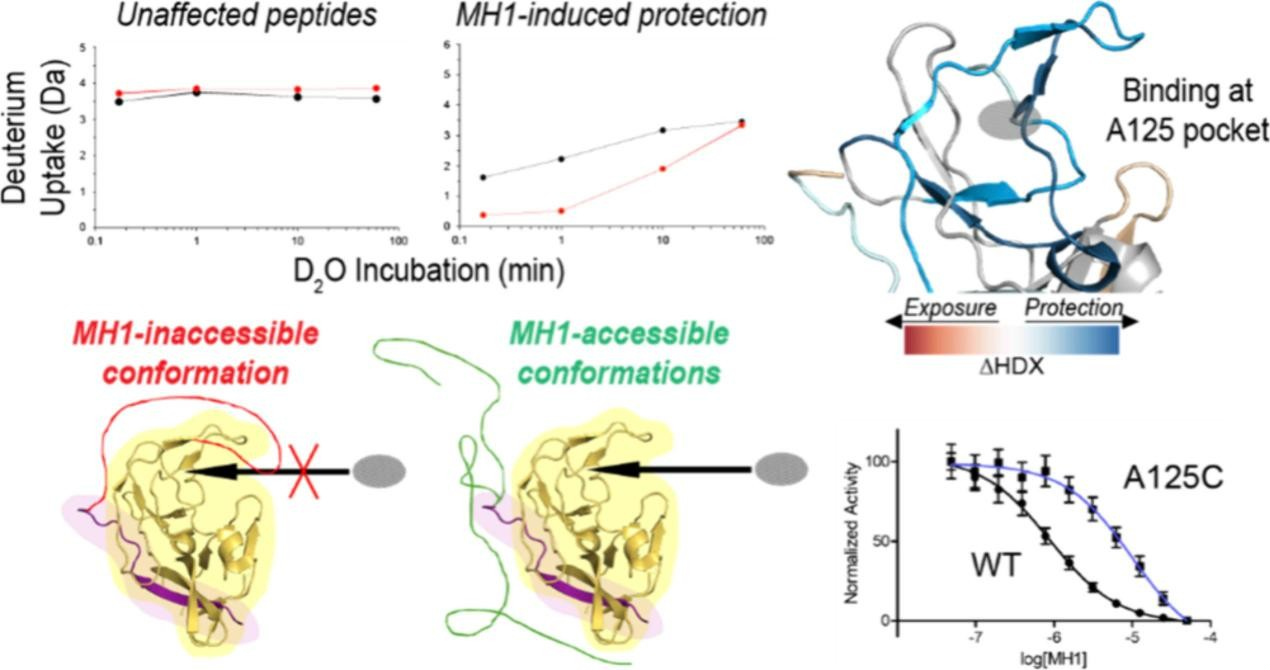
Inhibition of Zika Virus Protease by Modulating NS2B-NS3 Interactions
Using hydrogen–deuterium exchange mass spectrometry, the Hardy Lab shows that the Zika virus protease populates an open conformation when unbound or bound to the allosteric inhibitor MH1, and identifies a single substitution, A125C, that blocks allosteric inhibition. The results indicate that interactions between the NS2B cofactor and the NS3 core determine the potency of this class of inhibitors across the flaviviral proteases.
A. J. Smith, M. A. Rahat, L. J. Scaramozza, S. J. Eyles, J. A. Hardy, Biochemistry 2026, 65, 64–76
Vachet Lab · 2025
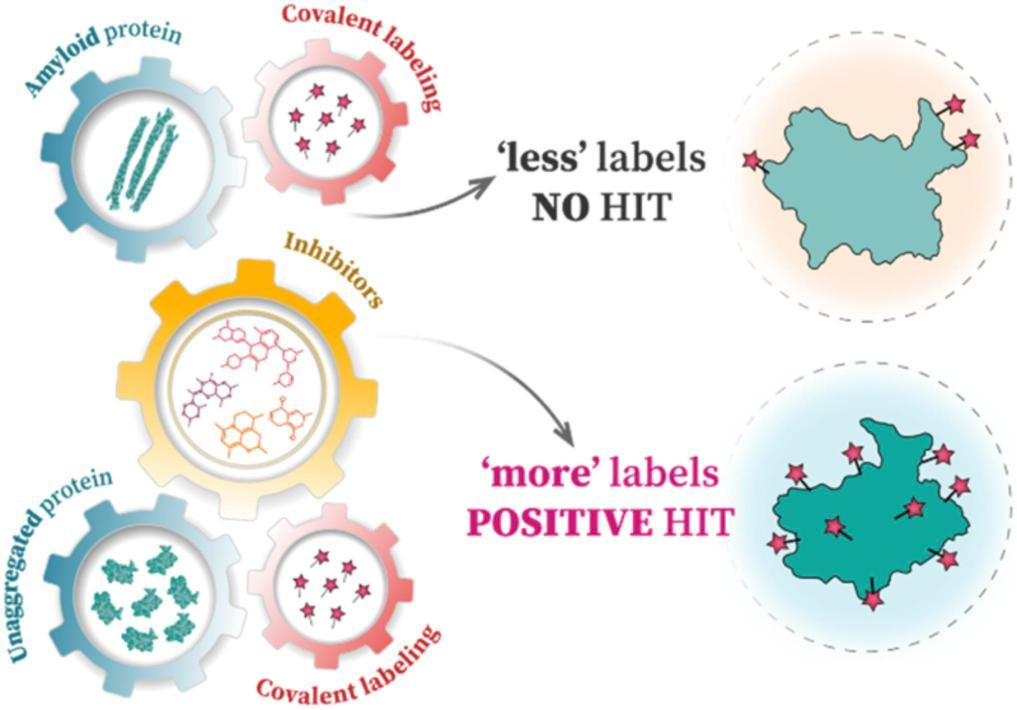
High-Throughput Screening of Amyloid Inhibitors via Covalent-Labeling Mass Spectrometry
Amyloid formation lowers the extent to which a protein is covalently labeled, and an inhibitor restores it. The Vachet Lab uses this effect as a mass spectrometry screen for amyloid inhibitors that gives fewer false positives than fluorescence and light-scattering methods and, with a MALDI-MS readout, tests more than 10 compounds per minute.
K. Khamnong, V. L. Stahl, O. N. Izikson, A. Devarajan, S. Thayumanavan, R. W. Vachet, Anal. Chem. 2025, 97, 12989–12997
Research across departments
Our faculty are involved in a number of interdepartmental training programs, while our graduate students run associations that support much of the department’s professional and social activities.
Get involved
Prospective graduate students
Learn about our PhD program. Applications are due December 15, 2026.
Undergraduate research
Learn how to get involved with research as an undergraduate.